Monday, 5 March 2012

A Tune For Two - Short Film Review


Here is a link to my review for Gorilla Film Magazine of the short film, A Tune For Two. It's a strange depiction of a hostage situation that very nearly proves the theory that the Muppets have the power to save lives.

Review:
http://gorillafilmmagazine.com/wordpress/2012/03/05/a-tune-for-two/

Watch the film here:
http://gorillafilmmagazine.com/wordpress/watchfilms/

Sunday, 19 February 2012

The Woman in Black Review


For the first time in quite a while, not all the scares are given away in the trailer for The Woman in Black. But then again, that would be asking a lot of the film’s promoters because James Watkins’ The Woman in Black packs more jumps into its running time than any other horror film seen in a long time.

Set in an unspecified year in the Edwardian era, Daniel Radcliffe plays Arthur Kipp, a father (unconvincing as his son could easily pass for his brother) and widowed lawyer who attempts to prove his worth at his firm by travelling to the north of England to sort out the estate of the recently deceased Alice Drablow. Set on going through her belongings with a fine tooth comb, Kipp has to enter Eel Marsh House, a place the villagers don’t talk about, located in an isolated sandy patch that is locked away from the rest of the world when the tide comes in. Naturally, more than just financial documents are buried deep in the heart of the decaying mansion.

James Watkins is fast becoming a specialist in creating little pockets of Hell all around the country. In his first film, Eden Lake (2008), Watkins transformed an idyllic leafy patch of England into a stomping crowd for a group of demented chavs and in the process carved out one of the best British horror films of the decade. Now, he turns his hand to an old school haunted house horror film backed by iconic horror studio Hammer, a move that continues the studios return to backing British titles that began with Wakewood (2011) after backing the US titles Let Me In (2010) and The Resident (2011).

Echoing the chills of classics like Robert Wise’s The Haunting (1963), The Woman in Black’s Eel Marsh House has to be the best Horrible House seen on screen since the Ulman house in Ti West’s House of the Devil (2009). Just like all haunted house movies, the dusty corridors and misty windows of the structures are the real stars of the film and despite the focus on Radcliffe’s first lead role since leaving Hogwarts, Eel Marsh House and the title character are the clear stars of the show. Watkins knows how to treat the woman of the title, initially only showing her in shadows and blurs, but unlike most recent ghost stories, The Woman in Black doesn’t drop the ball when she does appear in plain sight.

Just like the constantly terrifying forty minutes section of the play, Watkins’ version similarly makes Kipps’ first full night at Eel Marsh House, taking viewers on a ghost train consisting of one bone chilling moment after another and whilst it’s nothing groundbreaking (Creepy Toys ✓ Creepy Kids ✓ Suspicious Villagers ✓), Watkins is talented enough to make these slightly tired haunting cornerstones actually scary again. And make no mistake The Woman in Black is a scary, sometimes terrifying film.

When Watkins says Boo! you will jump and this formed a slight issue for me after a while. The Woman in Black is the ‘jumpiest’ film I’ve seen in the cinema in a long time, but after about an hours worth of loud noises and jump scares, you can’t help but find yourself getting used to the formula. The element that made the first 40 minutes of last years Insidious (2011) so good was its insistence on scaring us through a slow build up of horrible set pieces and it wouldn’t have hurt to have a similarly restrained approach. But again, this is a slight issue and the film packs plenty of slower paced, tension building set pieces into its running time and for all the loud noises it’s these sweat-inducing set ups that come back to you as you climb into bed.

It is worth mentioning that for all the scares, The Woman in Black is a lot of fun. You can’t help but smile through the fear when those old toys that you only ever see in horror films appear and the introduction of the ‘twins’ raised a much needed laugh. There is a moment at the end of the where it looks like Watkins is about to undo all his good work with a heavy dose of unneeded schmaltz but by leaving audiences with a final chilling image, The Woman In Black cements itself as a properly scary chiller that juggles fun and fear perfectly.

I suppose the only downside for Watkins is that thanks to Paranormal Activity 4 (currently without a release date), Ti West’s very good The Innkeepers (arriving in early June) and the chilling Livid (the latest offering from the makers of Inside (2007) currently without a release date), Watkins’ latest is gonna have some stiff competition for ‘Haunted House Film of the Year’ when, in any other year, it would be top of the tree.

In a year when people just aren’t buying houses, this year’s haunted house horror output looks set to continue that trend with or without the help of the economic crisis.

Saturday, 18 February 2012

Shame Review


Sex addiction hasn't had a great deal of coverage anywhere really, but in cinema, it’s had a particularly raw deal. The best thing that can be said for Black Snake Moan (2006) is that it’s the second best Samuel L. Jackson film to have Snake in the title whilst Choke (2008) was patchy at best. Thankfully, Steve McQueen’s Shame gives the subject the serious treatment that it deserves and the film is all the better for it.

Shame marks the second collaboration between director Steve McQueen and Michael Fassbender after the superb Hunger (2008) and on this form; Fassbender might have his wish of finding his very own Scorsese/De Niro relationship. Whilst the duo still have some way to replicating the sort of hit rate that saw films like Mean Streets (1973) and Taxi Driver (1976) emerge from the seventies, Raging Bull (1980) and The King of Comedy from the eighties and Goodfellas (1990) and Cape Fear (1991) from the nineties, the McQueen/Fassbender collaboration is already looking like a special one.

Shame follows the life of Brandon (Michael Fassbender), a good looking, successful New Yorker whose existence and social interactions are marred by his compulsive, lust for sex. This addiction soon spirals out of control when his equally damaged sister Sissy (Carey Mulligan) arrives on his doorstep looking for a place to stay.

Shooting in New York as a result of McQueen finding their addicts more open and helpful during the research stage of the development, the New York of Shame is both a paradise and a hell for Brandon, a city that allows him enough space to contemplate his addiction whilst simultaneously proving to be a feeding ground for his addiction as a simple commute into work establishes early on.

The early stages of the film establish Brandon’s daily routines which comprise on masturbation, work, visits from prostitutes, masturbation, perusing hardcore pornography and sexual encounters with women met at parties. These women find his honesty and attentive nature flattering when in reality his glare is exactly the same kind of stare of which predators look upon their prey with. Fassbender plays these social interactions with the same enigmatic distance that American Psycho’s (2000) Patrick Bateman displays when floating from party to board meeting.

Brandon’s pristine white walled, sterile living space functions as his own prison, a home where he can indulge his addiction free of any form of judgement. The arrival of Sissy both brings up anxious feelings from their childhood, but importantly, forces Brandon out of the apartment, into an office relationship which provides one of the best scenes in the movie; a brilliantly awkward dinner date.

Fassbender carries the film and it’s a fascinating, ballsy (excuse the pun) performance and Mulligan is equally intriguing as his sister. As you would imagine, the role of a nymphomaniac requires Fassbender to walk around starkers quite a lot of the time and to any of his growing female fan base, yes, you do see Magneto’s helmet (I’m not proud that the line made it into the review but its typed now).

Shame is a film that hints at the history of its characters without ever explicitly stating any events that carved the damaged souls of the two main characters. Without even saying a word, glances, stares and body language tell everything you’d ever need to know about the troubled relationship between the two. The fact that these ambiguities only add to the fascination rather than proving irritating is a testament to the performances (neither nominated for a thing at the Oscars).

 Shame is a raw, deliberately paced look at the still taboo subject of sex addiction with a shocker of an ending and a mesmerising performance by Fassbender. Treated realistically with sex scenes that are never eroticised, McQueen has created an addiction film to rival that of Aronofsky’s Requiem for a Dream (2000).

Aside from a truly excruciatingly slow performance of ‘New York, New York’, Shame is a triumph; a difficult, memorable film that’s not easy to shake off. Fassbender’s performance almost rivals his work in Hunger and his Brandon almost makes it to the top of my ‘favourite big screen nymphomaniacs’ list.

For anyone keen to know, he falls into second place, just behind Woody Allen’s Harry in Deconstructing Harry (1997). I’d be lying if I said I didn’t sit through Shame hoping that Brandon would tell a hooker, 'They should put your lips in the Smithsonian.'

Friday, 10 February 2012

People In Order: 1. Age - Short Film Review


Here is a link to my review for Gorilla Film Magazine of the short film, People In Order: 1. Age. Worthy of repeated viewing, Lenka Clayton and James Price must be praised for creating a documentary that simply films people banging a drum in order of their ages (1-100), somehow making a seemingly flippant experiment into something both affectionate and touching.

Review:
http://gorillafilmmagazine.com/wordpress/2012/02/10/people-in-order-1-age/

Watch the film here:
http://gorillafilmmagazine.com/wordpress/watchfilms/

Watch the rest of the People In Order series at:
http://vimeo.com/fieldstudies

Dogboarding - Short Film Review


Here is a link to my review for Gorilla Film Magazine of the short film, Dogboarding. It's a disturbing, strange and sometimes shocking concept that is sure to raise a smirk on the faces of everybody outside of the RSPCA. No animals were harmed in the making of this film (or review).

Review:
http://gorillafilmmagazine.com/wordpress/2012/01/24/dogboarding/

Watch the film here:
http://gorillafilmmagazine.com/wordpress/watchfilms/

Wednesday, 4 January 2012

The Girl with the Dragon Tattoo Review


David Fincher’s The Girl with the Dragon Tattoo arrives with quite a lot of pressure on its heavily inked shoulders. Expectation is coming from three fronts: the fans of Stieg Larsson’s novel (of which there are 30 million people and counting), fans of David Fincher (of which there are many) and fans of Niels Arden Oplev’s 2009 Swedish version (the camp I fall most confidently into of the three). But with the firepower of Fincher, James Bond and the girl from the opening of The Social Network (2010), the omens looked promising.

The film follows Mikael Blomkvist (Daniel Craig), a journalist who after publicly failing to take down a crooked businessman, decides to shy away from the spotlight leaving his paper and instead doing a job for retired CEO Henrik Vanger (Christopher Plummer). Vanger wants Mikael to find the killer of his niece Harriet who disappeared from the family island forty years ago. After fighting some demons of her own, rebellious but brilliant computer hacker Lisbeth Salander (Rooney Mara) joins Mikael in a hellish investigation of the twisted history of the Vanger family.

From the Bond style oil soaked opening credits that shake to the sound of ‘Immigrant Song’ to the truly inspired use of Enya’s ‘Orinoco Flow’ that haunts one of the film’s more dangerous moments, Fincher brings a style to the story the Swedish version just doesn’t have. And that’s not necessarily a criticism. Oplev’s film (originally made for TV) avoids drawing attention to itself and the result is gritty and raw. Fincher’s is still a tough watch but is flasher, tenser, ultimately more entertaining and as a result, sits much more comfortably on the big screen.

A key element of the film is family. ‘They fuck you up, your mum and dad’ wrote Philip Larkin, and if he had lived long enough to see this, he may have been tempted to add a few more family members into the mix. Fincher deftly manipulates our view of the Vanger Island into family member associations and by doing so, creates a piece of land that could rival Scorcese’s Shutter Island in the menacing stakes. By clearly showing us who lives in what part of the island, as it becomes clear that the family largely hate each other, Craig’s Blomkvist finds himself stuck on an island battered by waves of hate and anger. A floating family prison that’s haunted by the ghosts the past.

The performances too are very impressive. Rooney Mara more than matches Noomi Rapace’s acclaimed portrayal of the disturbed girl of the title and at one stage wears a t-shirt that beautiful sums her character up. She becomes increasingly more sexy, dangerous and wounded as the film progresses, a perfect match for Craig’s competent Blomkvist who, if nothing else, has introduced me to a fantastic new way of wearing glasses.

The ending suffers, like the Swedish version, as time ticks by (the film clocks in at 158 minutes) and another, somewhat confusing case has to be wrapped up but that’s more a fault of the book that of Fincher’s direction. By the time the credits roll, you are left with a very impressive, very adult movie that slightly trumps the Swedish version as a result of its cinematic qualities.

Fincher’s film looks great on the surface but you can’t really quite grasp whether there’s a heart beating beneath it until the very last frame. It’s an emotional final moment that surprisingly confirms there is indeed a heart beating beneath Fincher’s polished creation, and it’s ice cold.

Monday, 5 December 2011

My Top 5 Films of 2011

First, a few that didn’t make my top 5 but still have to be checked out. In no particular order: Kill List, The Artist, Le Quattro Volte, The Woman, Bridesmaids, Rango, The Skin I Live In, Submarine, We Need To Talk About Kevin, The Girl with the Dragon Tattoo, Archipelgo and the first 40 minutes of Insidious.

And while I'm sticking my two-cents in, my vote for the 'Most Overrated Film of 2011' is a tie between The Tree of Life and Take Shelter. The Tree of Life was a pretty bore whilst Take Shelter was pretty boring.


But onto the list, and at number 5…..

5. The Deep Blue Sea: Terrence Davies' seventh full length feature is also one of his best. An adaptation of the play by Terrence Rattigan, The Deep Blue Sea set 'around 1950' follows Hester (Rachel Weisz) as she leaves her dull, wealthy husband William (Simon Russell Beale) for the passionate Freddie (Tom Hiddlestone). Whether her choice was guided by a lust for love or need for passion, Hester soon finds herself in a desperate situation as characters find their own definitions of love soon to be in conflict with each others. Heartbreaking, beautiful filmmaking, Davies has creating another glorious time capsule as he captures the era perfectly, leaving you wishing for the return of the old fashioned pub sing-a-long. As stunning and classy a piece of cinema as you're ever likely to see.

4. Midnight in Paris: Grossing just over $53 million, Midnight in Paris leapfrogged  Hannah and Her Sisters (1986) to become Woody Allen’s most financially successful film to date. That may not be saying much in a year that saw Transformers: The Dark of the Moon steal just over $1 billon but this year saw Woody Allen make what some see as a long awaited return to form. Whilst I’m a huge fan, even enjoying recent flops like Scoop (2006), Cassandra’s Dream (2007) and Whatever Works (2009), Midnight in Paris is his best film since Mighty Aphrodite (1995) and without a shadow of a doubt, the most magical cinema experience of the year.


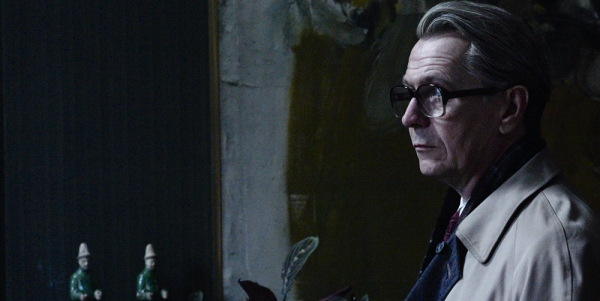
3. Tinker Tailor Soldier Spy: The best British film of the year featuring the best actor of the year in Gary Oldman, Tomas Alfredson’s Tinker Tailor Soldier Spy is a tense 127 minutes that slowly gets under your skin. Called out of retirement to find a Soviet mole lurking in the smoke stained offices of MI6, Oldman plays George Smiley, a man both doing his job and coming to terms with the idea that some of his closest colleagues may be capable of the deepest form of betrayal. Swapping car chases, shoot outs and adventure for tense silences, stony faces and the best office Christmas party ever committed to celluloid, Alfredson has surpassed the achievements of his last masterpiece (Let the Right One In) and created a very special film indeed.

 
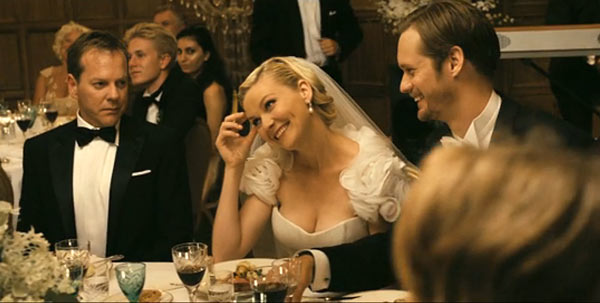
2. Melancholia: Lars Von Trier is something of an acquired taste. Responsible for the most depressing musical of all time (Dancer in the Dark (2000), the dullest Nicole Kidman movie, itself hotly contested accolade (Dogville (2003) and the most shocking film to creep into mainstream cinemas (Antichrist 2009), he is a unique genius at best and a pretentious bore at worst. Even if you like his films, he’s a difficult character to warm to in person, especially after claiming he ‘understands’ and ‘sympathises’ with Adolph Hitler. Remarks that saw him thrown out of the Cannes Film Festival. Of course, this was a joke and like most public comments he makes, wasn’t to be taken seriously. Whether or not you buy the notion that Melancholia is based on his own battle with depression doesn’t matter because the film itself is a true classic. One thing that has always marred Von Trier’s work has been its tendency to fall into long, dull patches, a prime example being Antichrist, a film that’s more shocking moments were linked together by at least an hours worth of yawn. Fortunately, Melancholia breaks this tradition with a passion. Starting with a breathtaking end of the world sequence, the film then darts back in time and splits into two sections. The first ‘Justine’ rivals the opening of The Godfather (1972) for the title of cinemas greatest wedding (it’s at least its funniest) whilst the second, ‘Claire’, is a tense, dread filled wait for the apocalypse that slowly puts the fear of God into you. One of the best experiences I’ve had in a cinema for years (and if you can see it in a cinema – DO!), Melancholia is Von Trier’s best film yet and left the audience I watched it with pinned to their seats long into the end credits thanks to a horrific final image that I still can’t shake.

 
1. Black Swan: Yes, the first film I saw this year, (and my first review for this blog) simply hasn’t been bettered. There’s not much more to say that I haven’t already said in my earlier post (http://weneedtheeggsbpl.blogspot.com/2011/01/black-swan-review.html) but on this form, Darren Aronofsky’s next project, an adaptation of the biblical tale of Noah’s Ark, looks set to violently trump the last attempt at filming the story, an attempt made by Evan Almighty (2007), which in all fairness wasn’t terrible, just more of a shame.