Thursday, 9 August 2012

Sight & Sound, Mary & Max and the Absence of Animation in the recent Top Tens


Check out my feature for Heyuguys.co.uk on the lack of animated films in the recent Sight and Sound poll and why a little-known Australian clay-animation deserves to break the Top 50.

Link: http://www.heyuguys.co.uk/2012/08/09/sight-and-sound-mary-and-max-and-the-absence-of-animation/

Sunday, 29 July 2012

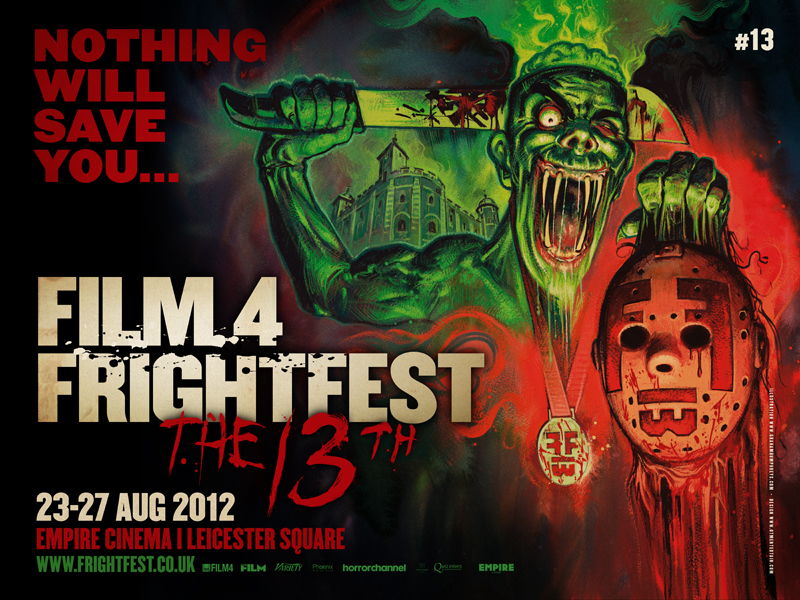
Film4 Frightfest 2012: 5 Most Anticipated


This year’s lineup features something for gore-hounds, giallo geeks and fans of the classics with titles ranging from the rarely seen complete ‘Cabel Cut’ of Clive Barker’s Nightbreed to Dead Sushi – a film about killer sushi – to a Toby Jones-starring celebration of Italian horror cinema in Berberian Sound Studio.
This year also sees the introduction of a new, third ‘Re-Discovery’ screen showing Hammer restorations and two favourites from February’s Frightfest Glasgow and with more films than ever before, Frightfest the 13th is already causing visitor’s headaches in terms of scheduling their blood-soaked five days.
While regular features The Horror Channel’s Short film Showcase, Andy Nyman’s Quiz from Hell and the Total Film Icon interview (This year with Italian maestro Dario Argento) will inevitably prove to be festival highlights, here I present my five predictions for the best films of Frightfest the 13th.
5. Maniac
From the director of P2 and the producing duo behind Switchblade Romance, this remake of nasty 1980 film looks set to be a late night favourite. Starring Elijah Wood as LA nut job Frank, Maniac gets its art house label as a result of a risky stylistic choice that sees that entire film play out from his POV, with glimpses of Brutal Baggins arriving in photographs and reflections. An inspired decision or a drearily pretentious gimmick? Only time will tell but the omens look good enough for Wood to finally shake off the hairy feet of Frodo and be remembered for a slightly more gruesome outing. That is until The Hobbit arrives in December.
4. Stitches
As one of my favourite comedians, any film starring Ross Noble makes into my list of most anticipated. The fact he plays a killer clown seals the deal. Stitches follows Noble as a sleazy clown who dies in a prank at a kids birthday a party only to return to the group years later thanks to the actions of a black magic clown cult. Here’s hoping he turns up and delivers what could well be the funniest Q & A in the history of the festival.
3. Sleep Tight
While Paca Plaza may be receiving a lot of attention with Rec 3 in the line-up, it is the film by his Rec co-creator Jaume Balagueró I’m most looking forward to. Following Cesar, a lonely janitor who sports one of the more unfortunate hairstyles of the festival, and his obsession with a new tenant in his building, Sleep Tight arrives with positive buzz from Fantastic Fest and The Spanish Film Festival in Australia and could take a leaf from Cesar’s book by quietly creep up on Frightfesters as a festival highlight.
2. Chained
Each year, Alan, Paul and Ian seem to deliver a film that gets everyone talking. 2008 had Martyrs. 2009 had The Human Centipede. 2010 had A Serbian Film snatched away from them at the last minute by Westminster Council and last year had the brilliant The Woman. So as no stranger to controversial titles, this years talking-point could well be the new film by Jennifer Lynch (daughter of David), Chained. The film has already kicked up a stink in the US by achieving the rare feat of achieving an NC-17 certificate due to violence alone. She has since gone to the cutting room for an R rating and it remains what version we will see at the festival but regardless, Lynch’s tale of a serial killer who captures and keeps the son of one of his victims remains a must-see.
1. V/H/S
Ask anyone in this year’s Sleepy Q (the name for the queue formed by those who camp overnight for tickets to the festival) for their pick of the festival and one title came up time and time again, V/H/S. A hit at Sundance and SXSW, the film is made up of six ghoulish tales from six different directors including Adam Wingard (A Horrible Way to Die) and Ti West (The House of the Devil). I’m surprised how excited I am about this anthology considering my take on the two that premiered last year as I was one of about six people who didn’t fall in love with Chillerama and the less said about The Theatre Bizarre the better. However, with the great feedback feeding anticipation of the involvement of West, one of the genres brightest talents, it looks set to be the one that most, including me, are looking forward to.
Hell, it might even wield enough scares to convert the found-footage haters, a group that at last year’s Frightfest seemed incredibly strong in numbers.
Check back around the last week of August for my pick of the best from the festival. I may be proved right or left knee-deep in blood-soaked humble pie. We’ll see.

Tuesday, 15 May 2012

She Monkeys Review


Here is a link to my review for Gorilla Film Magazine of Lisa Aschan's She Monkeys. A quietly odd film about sexual awakenings, human behaviour and the power struggle between two equestrian vaulters.

Review:
http://gorillafilmmagazine.com/2012/05/13/she-monkeys/

Thursday, 22 March 2012

Once Upon a Time in Anatolia Review


Nuri Bilge Ceylan’s Once Upon a Time in Anatolia is a delicately paced, sprawling piece of work that provides plenty of food for thought and stunning scenery to chew on after a hunt for a corpse proves a catalyst for philosophical discussions on life, death, love and buffalo yoghurt.

Set mostly in the darkest hours of the night, Once Upon a Time in Anatolia follows a doctor, a prosecutor, a police chief and a whole host of other sweaty, tired men squashed like sardines into three cars as they roam the hills of Anatolia looking for a buried body. Given direction by the two self-confessed killers, the search soon proves troublesome as one mountainside blends into another and the hunt for a nearby ‘round’ tree slowly becomes as ridiculous as it sounds.

Temperamental vehicles, a weak bladder and the incompetence of the worst grave diggers in Turkey soon give the men ample opportunities to chat amongst themselves about issues ranging from the flippant, to the humorous to the spiritual and back again and it’s precisely these glimpses into the characters souls that really make Anatolia something special.

An age old battle between science and faith begins when the prosecutor tells the doctor the story of the most beautiful woman he’s ever laid eyes on, a wife of a friend who predicted the exact time of her own death. Not counting an arguably less weighty earlier discussion on buffalo yoghurt, this is the first of many enlightening conversations that the men find themselves dwelling on as the search for the rotting corpse provokes thoughts about their own existence and it’s really only in retrospect that you begin to realise how deep each characters stories run. By the end of the film, you begin to realise, without ever being told in words, just why the doctor can’t bring himself to believe a woman had the ability to predict her own death and similarly, why the prosecutor must.

It’s a mysterious film, and I’m certain to have missed something. The mere sight of the mayor’s daughter seem to leave each man in turn wrestling with some form of epiphany and lights flicker when she’s around. In an almost silent sequence, she is presented as almost mythical, an unashamedly beautiful image of everything that’s good. When one of them makes the observation that she’ll probably live and die in the tiny isolated pocket of the world without ever truly spreading her wings, it’s a deeply affecting and painful moment and you can’t help but feel a pang of surprise for feeling so caught up in a figure that remains so entirely enigmatic.

The film is slow but crucially so. Thanks to the first ninety minutes unfolding largely in real time, you really feel the strain of the investigation. You’re encouraged to think, make judgements, put back-stories together and dwell on the philosophical issues that, along with the corpse, are keeping these men up at night. But, in a film that’s two hours and thirty minutes long, you’d be forgiven for thinking that Anatolia is another example of the critic friendly slow cinema; the type that’s clearly impressive upon reflection but, and say it quietly, can be mind (and bum) numbingly dull to actually sit through (Despite his eye for beauty, Béla Tarr was something of a serial offender).

Despite characters wandering the hills claiming ‘this is dragging’, Once Upon A Time in Anatolia doesn’t, that is until you’ve seen far too much wonder to care. Yes, at one moment when the doors to an autopsy room swing open and you’re not greeted by the end credits, you can’t help but begin to feel the films running time, but thankfully, this is only twenty minutes before the end. Transformers: Dark of the Moon was four minutes longer, Jackson’s King Kong was thirty seven and both have far duller twenty minute stretches than anything seen in Anatolia; a film which has to make do without the acting clout of Shia LaBeouf or the timeless appeal of a massive gorilla.

Reading this back, I feel that maybe I’m selling Once Upon A Time in Anatolia as a little heavy, but the film balances its soul with a lot of dark humour. The police chief’s rotund driver, Arab Ali, can barely speak a word or move a step without raising a laugh and Turkey’s answer to the Chuckle Brothers can be found in the hapless gravediggers. Add to this a body bag that proves just as difficult to locate as the body and by the time the sun rises, Anatolia finds itself, albeit sporadically, a bruised funny bone.

It’s not for everyone, and like any film that takes its time, if you’re not ready to engage with Ceylan’s ideas on his own terms, you’ll find yourself struggling. But it’s a beautiful film and whilst its final stretch may test the patience of a saint, it’s rare to see a film so thoughtful pack so many laughs, visual treats and complex character depth into its long running time without getting tiresome. If only ‘slow’ cinema could always be this rewarding.  Seek it out.

Monday, 5 March 2012

A Tune For Two - Short Film Review


Here is a link to my review for Gorilla Film Magazine of the short film, A Tune For Two. It's a strange depiction of a hostage situation that very nearly proves the theory that the Muppets have the power to save lives.

Review:
http://gorillafilmmagazine.com/wordpress/2012/03/05/a-tune-for-two/

Watch the film here:
http://gorillafilmmagazine.com/wordpress/watchfilms/

Sunday, 19 February 2012

The Woman in Black Review


For the first time in quite a while, not all the scares are given away in the trailer for The Woman in Black. But then again, that would be asking a lot of the film’s promoters because James Watkins’ The Woman in Black packs more jumps into its running time than any other horror film seen in a long time.

Set in an unspecified year in the Edwardian era, Daniel Radcliffe plays Arthur Kipp, a father (unconvincing as his son could easily pass for his brother) and widowed lawyer who attempts to prove his worth at his firm by travelling to the north of England to sort out the estate of the recently deceased Alice Drablow. Set on going through her belongings with a fine tooth comb, Kipp has to enter Eel Marsh House, a place the villagers don’t talk about, located in an isolated sandy patch that is locked away from the rest of the world when the tide comes in. Naturally, more than just financial documents are buried deep in the heart of the decaying mansion.

James Watkins is fast becoming a specialist in creating little pockets of Hell all around the country. In his first film, Eden Lake (2008), Watkins transformed an idyllic leafy patch of England into a stomping crowd for a group of demented chavs and in the process carved out one of the best British horror films of the decade. Now, he turns his hand to an old school haunted house horror film backed by iconic horror studio Hammer, a move that continues the studios return to backing British titles that began with Wakewood (2011) after backing the US titles Let Me In (2010) and The Resident (2011).

Echoing the chills of classics like Robert Wise’s The Haunting (1963), The Woman in Black’s Eel Marsh House has to be the best Horrible House seen on screen since the Ulman house in Ti West’s House of the Devil (2009). Just like all haunted house movies, the dusty corridors and misty windows of the structures are the real stars of the film and despite the focus on Radcliffe’s first lead role since leaving Hogwarts, Eel Marsh House and the title character are the clear stars of the show. Watkins knows how to treat the woman of the title, initially only showing her in shadows and blurs, but unlike most recent ghost stories, The Woman in Black doesn’t drop the ball when she does appear in plain sight.

Just like the constantly terrifying forty minutes section of the play, Watkins’ version similarly makes Kipps’ first full night at Eel Marsh House, taking viewers on a ghost train consisting of one bone chilling moment after another and whilst it’s nothing groundbreaking (Creepy Toys Creepy Kids Suspicious Villagers ), Watkins is talented enough to make these slightly tired haunting cornerstones actually scary again. And make no mistake The Woman in Black is a scary, sometimes terrifying film.

When Watkins says Boo! you will jump and this formed a slight issue for me after a while. The Woman in Black is the ‘jumpiest’ film I’ve seen in the cinema in a long time, but after about an hours worth of loud noises and jump scares, you can’t help but find yourself getting used to the formula. The element that made the first 40 minutes of last years Insidious (2011) so good was its insistence on scaring us through a slow build up of horrible set pieces and it wouldn’t have hurt to have a similarly restrained approach. But again, this is a slight issue and the film packs plenty of slower paced, tension building set pieces into its running time and for all the loud noises it’s these sweat-inducing set ups that come back to you as you climb into bed.

It is worth mentioning that for all the scares, The Woman in Black is a lot of fun. You can’t help but smile through the fear when those old toys that you only ever see in horror films appear and the introduction of the ‘twins’ raised a much needed laugh. There is a moment at the end of the where it looks like Watkins is about to undo all his good work with a heavy dose of unneeded schmaltz but by leaving audiences with a final chilling image, The Woman In Black cements itself as a properly scary chiller that juggles fun and fear perfectly.

I suppose the only downside for Watkins is that thanks to Paranormal Activity 4 (currently without a release date), Ti West’s very good The Innkeepers (arriving in early June) and the chilling Livid (the latest offering from the makers of Inside (2007) currently without a release date), Watkins’ latest is gonna have some stiff competition for ‘Haunted House Film of the Year’ when, in any other year, it would be top of the tree.

In a year when people just aren’t buying houses, this year’s haunted house horror output looks set to continue that trend with or without the help of the economic crisis.

Saturday, 18 February 2012

Shame Review


Sex addiction hasn't had a great deal of coverage anywhere really, but in cinema, it’s had a particularly raw deal. The best thing that can be said for Black Snake Moan (2006) is that it’s the second best Samuel L. Jackson film to have Snake in the title whilst Choke (2008) was patchy at best. Thankfully, Steve McQueen’s Shame gives the subject the serious treatment that it deserves and the film is all the better for it.

Shame marks the second collaboration between director Steve McQueen and Michael Fassbender after the superb Hunger (2008) and on this form; Fassbender might have his wish of finding his very own Scorsese/De Niro relationship. Whilst the duo still have some way to replicating the sort of hit rate that saw films like Mean Streets (1973) and Taxi Driver (1976) emerge from the seventies, Raging Bull (1980) and The King of Comedy from the eighties and Goodfellas (1990) and Cape Fear (1991) from the nineties, the McQueen/Fassbender collaboration is already looking like a special one.

Shame follows the life of Brandon (Michael Fassbender), a good looking, successful New Yorker whose existence and social interactions are marred by his compulsive, lust for sex. This addiction soon spirals out of control when his equally damaged sister Sissy (Carey Mulligan) arrives on his doorstep looking for a place to stay.

Shooting in New York as a result of McQueen finding their addicts more open and helpful during the research stage of the development, the New York of Shame is both a paradise and a hell for Brandon, a city that allows him enough space to contemplate his addiction whilst simultaneously proving to be a feeding ground for his addiction as a simple commute into work establishes early on.

The early stages of the film establish Brandon’s daily routines which comprise on masturbation, work, visits from prostitutes, masturbation, perusing hardcore pornography and sexual encounters with women met at parties. These women find his honesty and attentive nature flattering when in reality his glare is exactly the same kind of stare of which predators look upon their prey with. Fassbender plays these social interactions with the same enigmatic distance that American Psycho’s (2000) Patrick Bateman displays when floating from party to board meeting.

Brandon’s pristine white walled, sterile living space functions as his own prison, a home where he can indulge his addiction free of any form of judgement. The arrival of Sissy both brings up anxious feelings from their childhood, but importantly, forces Brandon out of the apartment, into an office relationship which provides one of the best scenes in the movie; a brilliantly awkward dinner date.

Fassbender carries the film and it’s a fascinating, ballsy (excuse the pun) performance and Mulligan is equally intriguing as his sister. As you would imagine, the role of a nymphomaniac requires Fassbender to walk around starkers quite a lot of the time and to any of his growing female fan base, yes, you do see Magneto’s helmet (I’m not proud that the line made it into the review but its typed now).

Shame is a film that hints at the history of its characters without ever explicitly stating any events that carved the damaged souls of the two main characters. Without even saying a word, glances, stares and body language tell everything you’d ever need to know about the troubled relationship between the two. The fact that these ambiguities only add to the fascination rather than proving irritating is a testament to the performances (neither nominated for a thing at the Oscars).

 Shame is a raw, deliberately paced look at the still taboo subject of sex addiction with a shocker of an ending and a mesmerising performance by Fassbender. Treated realistically with sex scenes that are never eroticised, McQueen has created an addiction film to rival that of Aronofsky’s Requiem for a Dream (2000).

Aside from a truly excruciatingly slow performance of ‘New York, New York’, Shame is a triumph; a difficult, memorable film that’s not easy to shake off. Fassbender’s performance almost rivals his work in Hunger and his Brandon almost makes it to the top of my ‘favourite big screen nymphomaniacs’ list.

For anyone keen to know, he falls into second place, just behind Woody Allen’s Harry in Deconstructing Harry (1997). I’d be lying if I said I didn’t sit through Shame hoping that Brandon would tell a hooker, 'They should put your lips in the Smithsonian.'

Friday, 10 February 2012

People In Order: 1. Age - Short Film Review


Here is a link to my review for Gorilla Film Magazine of the short film, People In Order: 1. Age. Worthy of repeated viewing, Lenka Clayton and James Price must be praised for creating a documentary that simply films people banging a drum in order of their ages (1-100), somehow making a seemingly flippant experiment into something both affectionate and touching.

Review:
http://gorillafilmmagazine.com/wordpress/2012/02/10/people-in-order-1-age/

Watch the film here:
http://gorillafilmmagazine.com/wordpress/watchfilms/

Watch the rest of the People In Order series at:
http://vimeo.com/fieldstudies

Dogboarding - Short Film Review


Here is a link to my review for Gorilla Film Magazine of the short film, Dogboarding. It's a disturbing, strange and sometimes shocking concept that is sure to raise a smirk on the faces of everybody outside of the RSPCA. No animals were harmed in the making of this film (or review).

Review:
http://gorillafilmmagazine.com/wordpress/2012/01/24/dogboarding/

Watch the film here:
http://gorillafilmmagazine.com/wordpress/watchfilms/

Wednesday, 4 January 2012

The Girl with the Dragon Tattoo Review


David Fincher’s The Girl with the Dragon Tattoo arrives with quite a lot of pressure on its heavily inked shoulders. Expectation is coming from three fronts: the fans of Stieg Larsson’s novel (of which there are 30 million people and counting), fans of David Fincher (of which there are many) and fans of Niels Arden Oplev’s 2009 Swedish version (the camp I fall most confidently into of the three). But with the firepower of Fincher, James Bond and the girl from the opening of The Social Network (2010), the omens looked promising.

The film follows Mikael Blomkvist (Daniel Craig), a journalist who after publicly failing to take down a crooked businessman, decides to shy away from the spotlight leaving his paper and instead doing a job for retired CEO Henrik Vanger (Christopher Plummer). Vanger wants Mikael to find the killer of his niece Harriet who disappeared from the family island forty years ago. After fighting some demons of her own, rebellious but brilliant computer hacker Lisbeth Salander (Rooney Mara) joins Mikael in a hellish investigation of the twisted history of the Vanger family.

From the Bond style oil soaked opening credits that shake to the sound of ‘Immigrant Song’ to the truly inspired use of Enya’s ‘Orinoco Flow’ that haunts one of the film’s more dangerous moments, Fincher brings a style to the story the Swedish version just doesn’t have. And that’s not necessarily a criticism. Oplev’s film (originally made for TV) avoids drawing attention to itself and the result is gritty and raw. Fincher’s is still a tough watch but is flasher, tenser, ultimately more entertaining and as a result, sits much more comfortably on the big screen.

A key element of the film is family. ‘They fuck you up, your mum and dad’ wrote Philip Larkin, and if he had lived long enough to see this, he may have been tempted to add a few more family members into the mix. Fincher deftly manipulates our view of the Vanger Island into family member associations and by doing so, creates a piece of land that could rival Scorcese’s Shutter Island in the menacing stakes. By clearly showing us who lives in what part of the island, as it becomes clear that the family largely hate each other, Craig’s Blomkvist finds himself stuck on an island battered by waves of hate and anger. A floating family prison that’s haunted by the ghosts the past.

The performances too are very impressive. Rooney Mara more than matches Noomi Rapace’s acclaimed portrayal of the disturbed girl of the title and at one stage wears a t-shirt that beautiful sums her character up. She becomes increasingly more sexy, dangerous and wounded as the film progresses, a perfect match for Craig’s competent Blomkvist who, if nothing else, has introduced me to a fantastic new way of wearing glasses.

The ending suffers, like the Swedish version, as time ticks by (the film clocks in at 158 minutes) and another, somewhat confusing case has to be wrapped up but that’s more a fault of the book that of Fincher’s direction. By the time the credits roll, you are left with a very impressive, very adult movie that slightly trumps the Swedish version as a result of its cinematic qualities.

Fincher’s film looks great on the surface but you can’t really quite grasp whether there’s a heart beating beneath it until the very last frame. It’s an emotional final moment that surprisingly confirms there is indeed a heart beating beneath Fincher’s polished creation, and it’s ice cold.

Monday, 5 December 2011

My Top 5 Films of 2011

First, a few that didn’t make my top 5 but still have to be checked out. In no particular order: Kill List, The Artist, Le Quattro Volte, The Woman, Bridesmaids, Rango, The Skin I Live In, Submarine, We Need To Talk About Kevin, The Girl with the Dragon Tattoo, Archipelgo and the first 40 minutes of Insidious.

And while I'm sticking my two-cents in, my vote for the 'Most Overrated Film of 2011' is a tie between The Tree of Life and Take Shelter. The Tree of Life was a pretty bore whilst Take Shelter was pretty boring.


But onto the list, and at number 5…..

5. The Deep Blue Sea: Terrence Davies' seventh full length feature is also one of his best. An adaptation of the play by Terrence Rattigan, The Deep Blue Sea set 'around 1950' follows Hester (Rachel Weisz) as she leaves her dull, wealthy husband William (Simon Russell Beale) for the passionate Freddie (Tom Hiddlestone). Whether her choice was guided by a lust for love or need for passion, Hester soon finds herself in a desperate situation as characters find their own definitions of love soon to be in conflict with each others. Heartbreaking, beautiful filmmaking, Davies has creating another glorious time capsule as he captures the era perfectly, leaving you wishing for the return of the old fashioned pub sing-a-long. As stunning and classy a piece of cinema as you're ever likely to see.

4. Midnight in Paris: Grossing just over $53 million, Midnight in Paris leapfrogged  Hannah and Her Sisters (1986) to become Woody Allen’s most financially successful film to date. That may not be saying much in a year that saw Transformers: The Dark of the Moon steal just over $1 billon but this year saw Woody Allen make what some see as a long awaited return to form. Whilst I’m a huge fan, even enjoying recent flops like Scoop (2006), Cassandra’s Dream (2007) and Whatever Works (2009), Midnight in Paris is his best film since Mighty Aphrodite (1995) and without a shadow of a doubt, the most magical cinema experience of the year.


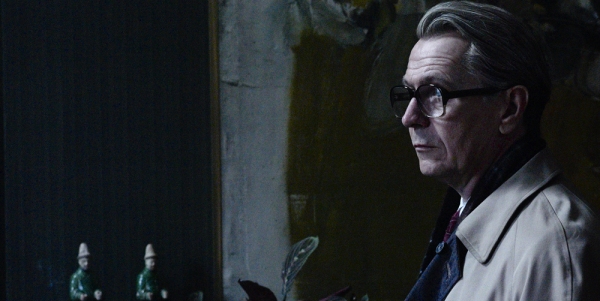
3. Tinker Tailor Soldier Spy: The best British film of the year featuring the best actor of the year in Gary Oldman, Tomas Alfredson’s Tinker Tailor Soldier Spy is a tense 127 minutes that slowly gets under your skin. Called out of retirement to find a Soviet mole lurking in the smoke stained offices of MI6, Oldman plays George Smiley, a man both doing his job and coming to terms with the idea that some of his closest colleagues may be capable of the deepest form of betrayal. Swapping car chases, shoot outs and adventure for tense silences, stony faces and the best office Christmas party ever committed to celluloid, Alfredson has surpassed the achievements of his last masterpiece (Let the Right One In) and created a very special film indeed.

 
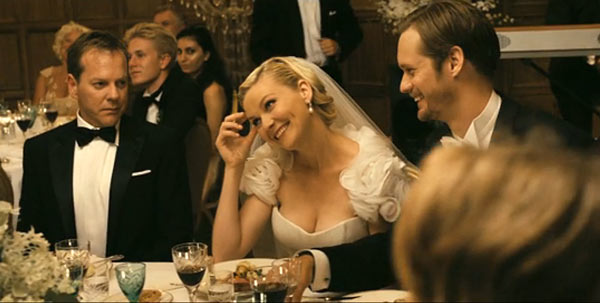
2. Melancholia: Lars Von Trier is something of an acquired taste. Responsible for the most depressing musical of all time (Dancer in the Dark (2000), the dullest Nicole Kidman movie, itself hotly contested accolade (Dogville (2003) and the most shocking film to creep into mainstream cinemas (Antichrist 2009), he is a unique genius at best and a pretentious bore at worst. Even if you like his films, he’s a difficult character to warm to in person, especially after claiming he ‘understands’ and ‘sympathises’ with Adolph Hitler. Remarks that saw him thrown out of the Cannes Film Festival. Of course, this was a joke and like most public comments he makes, wasn’t to be taken seriously. Whether or not you buy the notion that Melancholia is based on his own battle with depression doesn’t matter because the film itself is a true classic. One thing that has always marred Von Trier’s work has been its tendency to fall into long, dull patches, a prime example being Antichrist, a film that’s more shocking moments were linked together by at least an hours worth of yawn. Fortunately, Melancholia breaks this tradition with a passion. Starting with a breathtaking end of the world sequence, the film then darts back in time and splits into two sections. The first ‘Justine’ rivals the opening of The Godfather (1972) for the title of cinemas greatest wedding (it’s at least its funniest) whilst the second, ‘Claire’, is a tense, dread filled wait for the apocalypse that slowly puts the fear of God into you. One of the best experiences I’ve had in a cinema for years (and if you can see it in a cinema – DO!), Melancholia is Von Trier’s best film yet and left the audience I watched it with pinned to their seats long into the end credits thanks to a horrific final image that I still can’t shake.

 
1. Black Swan: Yes, the first film I saw this year, (and my first review for this blog) simply hasn’t been bettered. There’s not much more to say that I haven’t already said in my earlier post (http://weneedtheeggsbpl.blogspot.com/2011/01/black-swan-review.html) but on this form, Darren Aronofsky’s next project, an adaptation of the biblical tale of Noah’s Ark, looks set to violently trump the last attempt at filming the story, an attempt made by Evan Almighty (2007), which in all fairness wasn’t terrible, just more of a shame.  

Thursday, 13 October 2011

Film4 Frightfest - Vile Review

 
And so Midnight Movie number 2: Vile. Directed by Taylor Sheridan, Vile managed to create one of the most uncomfortable atmospheres of the festival. Truly nasty, grim, violent and draining, the film for most of its running time shapes up to be something really quite special but, unfortunately, loses any credibility thanks to a dire ending. It may sound like the fate of most entries in the rapidly dying torture porn genre but in the case of Vile, this really is genuinely more of a shame than it sounds.

The film opens as a group of friends are targeted by a perfume selling older woman who in actual fact is something of an Avon service from the bowels of Hell. Before they have time to say thanks but no thanks, she has donned a gas mask and sent them all into a deep sleep. Waking up in a strange warehouse full of other strangers, the ground find themselves tied to chairs with vials (geddit) surgically attached to the back of their heads. A video then tells them that they have 22 hours to fill the vials with a chemical that is released from the brain when a person experiences pain.

So there we go. What follows, as can be expected, is an hour of self inflicted organised pain as the group take it in turns to reach the 100% mark that will unlock the doors and free them all. Vile almost immediately makes itself more interesting than just a film with a sick premise in its handling of personalities. There is a fantastic early discussion as to whether the men should only take part which provoked laughs and passionate ‘gender roles’ arguments from both the men on screen and the entire Frightfest audience.

Surprisingly dark humour also comes from the refreshingly organised manner that the cast get themselves together. The women don’t run around screaming, the men don’t break down and punch walls and the group avoid predictably breaking off into opposing factions. Instead, they pull their heads together and decide to each take a slice of the pain, the whole group attacking one member, then another, then another in a disturbingly calm manner. But as you can imagine, any moments of humour in Vile are soon quashed: this is a grim picture. Tweezers, boiling water, irons and a whole host of nasty rusty tools are used to create a solid hour of wincing.

From the flames of this nasty film arrived the most evil character seen at Frightfest. Kelly (Stefanie Braboza) (and yes I did have to look up the name as after an hour of group mutilation, faces and names tend to blur into one another) establishes herself as enemy number one early on by suggesting the ‘Men only’ policy but further makes herself hard to love by going way overboard in the first group beating by breaking a pair of legs. In fact, a clear indication of how effective Kelly is, is that when it was her turn to be hurt, in a film of solemn, brutal, pain-induced awkward silences, Frightfesters across the cinema passionately cheered.

Unfortunately, for all the good, interesting things that Vile does, in the end all the violence and nastiness just doesn’t have a point. There is a hint all the goings on in the film are to help with some form of medication, but rather than push the idea into a clear message, it remains only a hint and coupled with the fact that there really is no pay off, consequently it’s hard not to think ‘what’s the point?’. If the film was brave enough to follow a film like Martyrs (2008) in having a bold, damning resolution that had something to say, the violence in the film would have at least had some form of wider context to help make the bitter pill easier to swallow. Instead, we are left with an hour and a half of people beating each other up. Nothing more, nothing less.

As it is, the lack of point leave Vile a despicable, pointless near-miss that’s near impossible to recommend. Paul took to the stage prior to the screening and said that he hopes Vile will be torture porn’s final bow. If it is (and I’m sure most agree with Paul), it is something of a shame that the much despised sub-genre will go out with a nasty whimper rather than leaving with something to say.

Film4 Frightfest - Tucker and Dale Vs Evil Review


In what was one of the most heavily anticipated screenings of the festival, Eli Craig’s Tucker and Dale Vs Evil arrived on Friday night and immediately became a favourite of almost everyone who saw it. Playing with hillbilly horror conventions established by classics like Deliverance (1972), Tucker and Dale Vs Evil proved to be a true crowd pleaser and arguably the best horror-comedy since Shaun of the Dead (2004).

The story revolves around Tucker (Alan Tudyk) and Dale (Tyler Labine), two well meaning hillbillies who are looking forward to a peaceful vacation in their new holiday home. Unfortunately for them, a group of horror-cinema savvy teens are also camping in the nearby woods, scaring themselves with tales that play like deleted scenes from The Texas Chainsaw Massacre (1974).

When Alison (Katrina Bowden), one of the teens, falls into the nearby lake, Tucker and Dale lend a helping hand but their innocent cries of ‘We’ve got your friend’ start off a chain of deadly misunderstandings that leave the group thinking the harmless hillbillies are actually the kind of backwards folk they see hacking teens to bits on the big screen every weekend.

Craig then takes extreme pleasure referencing his favourite horror movies as each hillbilly horror trope goes against the lovable duo in increasingly bloodier ways as the teens begin to accidentally kill themselves off. To go into anymore detail would be spoiling some brilliantly clever misunderstandings but suffice to say, a chainsaw is at the heart of one of the best.

Despite the first hour essentially consisting of a series of horror conventions being turned on their head, it is a real credit to Craig that the film never feels formulaic or repetitive. Each gruesome mix-up is both clever and funny but the real strength and heart of the film lies in the performances of Tudyk and Labine as the title characters. Tudyk once again brings another reliably assured performance as the straight man of the couple whilst Labine brings that strange warmth and vulnerability that seems to come naturally to bigger actors with beards.

In what are clearly outrageous circumstances, the cynical Tucker and good natured Dale convey a real friendship that is actually affecting and is sure to induce glassy eyes in parts. What makes this even more impressive is that this kind of emotionally twang is somewhat absent from most comedy-horrors, with the only other recent example coming in the latter stages of Shaun of the Dead, “I don’t think I’ve got it in me to shoot my flatmate, my mum and my girlfriend all in the same evening.”

Funny, clever, gory and sure to leave a lump in the throat, Tucker and Dale Vs Evil is one of the best horror-comedies to date. A real winner at Frightfest, it prompts the thought that maybe Leatherface and co have been gravely misrepresented all these years.

Saturday, 1 October 2011

Film4 Frightfest 2011 - Blood Runs Cold Review


Following Urban Explorers was my first Discovery screen film, the Swedish (but English language) Blood Runs Cold, a slasher made on a shoestring budget with a lot of charm, a lot of a laughs, a lot of good, a lot of bad and one of best killers I’ve seen in a horror film in a long time.

Directed by Sonny Laguna, Blood Runs Cold sees Winona, a struggling musician move into a new house in her snowy hometown. After she bumps into an old flame and his loved up friends, the four of them return to the house for drinks, partying and sex only to be rudely awoken the next morning by an axe-wielding maniac.

First the bad. The acting is terrible, the gore is poor and it’s as dumb as a movie can be. However, one thing saves this film in a big way – the killer. Wearing a jacket, snow goggles and woolly ski hat, he butchers the cast in a way that would suggest he knows he’s being watched.

Here is a maniac that walks past the window, stops and points at his prey for kicks. A killer that would rather axe an unlocked door to pieces rather than just opening it. You can’t help but imagine him wearing a smirk the size of his axe underneath his bandaged face. He is, simply put, up there with Freddy and Jason - except this  classic killer has seemingly wandered into a student film and therein lies the film’s greatest strengths and fatal flaws.

The sound is dire, I’m pretty sure I saw a mic in a mirror and thanks to shoddy colour correction, parts of the film carry a strange orange glow but these all add up to giving the film a strange amateurish  charm. Couple this with a truly memorable killer and Blood Runs Cold becomes a strange, somewhat kitsch horror movie.

It may seem that a forgotten horror icon is taking his anger out on the crappiest production he can find, but when embraced, Blood Runs Cold can confidently join the brilliantly terrible movie gang alongside Top Gun (1986), Crank (2006), and my all-time favourite, the beautifully bad Shoot Em’ Up (2007).

Film4 Frightfest 2011 - Urban Explorers Review


As my intended screening Rabies sold out, late afternoon arrived and I was looking at my second unexpected film of the day, German underground thriller Urban Explorers. Directed by Andy Fetscher, the film follows a group of adventurous twenty-something who get their kicks by explorering the neglected underground world of Berlin.

As they get dangerously into increasingly,  remote Nazi themed areas, one of them has an accident and is unable to move, but getting help becomes tricky as a strange and clearly mental Former East German body guard named Armin is discovered to be living beneath the surface, stuck in something of a time warp.

Unfortunately that’s about as much as an honest review as I can give as the screening was a bit of a botched job. After having no sound for the first five minutes, it turned out that the print was without subtitles. This seemed to have two effects on the audience – some enjoyed the threatening sense of alienation at not totally understanding the ramblings of the psychotic Armin, others found it frustrating. I fell into the latter.

However, without having a clue what Armin was saying didn’t ruin what was a generally well was made, genuinely suspenseful film with one great fridge-related scare and a surprisingly brutal ending.

An extremely shocked and apologetic Fetscher took to the stage afterwards and apologised for the print, telling Frightfesters that the dialogue was important and that we unfortunately missed some great jokes. Out of respect for what could be a better film with subtitles, I will let my review rest until I get the chance to see the film as it was intended.

Sunday, 18 September 2011

Greatest Living Filmmakers: A Personal Top 5

Having recently rewatched my collection of David Lynch movies, I started to wonder who, alongside the great man himself, would make it into my top 5 greatest living directors working today. Whittling the names down was tough (The Coens, Coppala, Scorsese, Cameron, Godard), but here is my list in no particular order of the filmmakers that are still (almost) incapable of creating a dud.

Woody Allen

Having made almost a film a year since 1969, Woody is by far one of the most prolific filmmakers working today. Responsible for my favourite film of all time (Annie Hall) and loads more that easily make my top 20 (Manhattan, Love and Death, Stardust Memories, The Purple Rose of Cairo, Hannah and Her Sisters, Crimes and Misdemeanors, Husbands and Wives, Match Point) Woody Allen has written some of the greatest lines heard in some of the greatest films of all time. Simply put: my favourite filmmaker of all time.


Quentin Tarantino

Before I met Annie Hall, there was Pulp Fiction. Unlike any film I had seen before, it was the movie that made me want a career in celluloid. He may have missed the mark by some way with Death Proof, but by taking his time (6 films in 19 years) he has managed to shape popular culture with his razor sharp dialogue, memorable set pieces and awesome soundtracks. One of the best of my lifetime.


Gaspar Noe

Creating horror without actually having made a "horror film" Noe has been responsible for creating some of most shocking images ever seen on the big screen with only 3 films. His first film, I Stand Alone, had a 30 second break that warned people what was following was shocking and that they should leave the cinema if they felt vulnerable. His shocking follow up Irreversible wasn't that kind and left Cannes shaken as 200 walked out and 3 had to be carried. His latest, Enter The Void, is a sprawling vision far too complex to be summed up here. Evoking feelings that run way deeper than anyting Hostel or Saw could dream of, Gaspar Noe has a visual style and ethos that make him one of the most exciting, disturbingly brilliant filmmakers working today. 

David Lynch

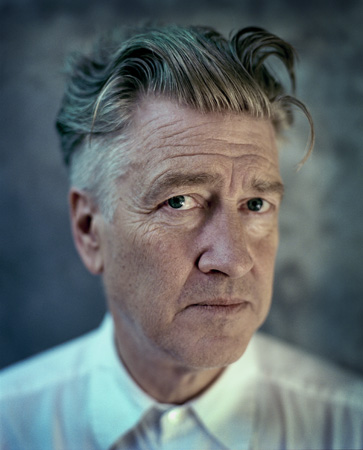
Where better to pick up from 'disturbingly brilliant' than David Lynch. Creator of Twin Peaks, Lynch has managed to bring dreams to screens everywhere since his warped maiden voyage, Eraserhead. His other surreal highlights include Twin Peaks: Fire Walk With Me, Blue Velvet, Mulholland Drive  and Inland Empire. Whether it be that thing behind the dumpster or that room full of bunnies, Lynch knows exactly how to get under our skin in the strangest of ways. By peeling back the skin of the suburbia and showing us the bugs that crawl beneath, he makes a convincing argument that we may be living in a place more terrifying than anything in our nightmares. Don't eat cheese before bed, just watch Lynch.

Park Chan-Wook

The South Korean master of revenge Park Chan-wook has made some of the best films to come of out of Asia in the last 20 years. Rivaling the work of Takeshi Miike for sheer gut-punch nastiness, Chan-wook's visual flair, plot twists and Almodovar-esque puzzlebox structures have made for essential viewing. His best known work include Joint Security Area, Thirst and for my money, one of the great film trilogies of all time, 'The Vengence Trilogy'. Made up of three films unconnected by plot but united by the revenge theme, this trilogy is comprised of Sympathy For Mr. Vengeance, Oldboy and Lady Vengeance. His next film, Stoker,  is his first in the english language and is suprisingly written by Wentworth Miller. Yep, him off Prison Break.


Saturday, 3 September 2011

Film4 Frightfest 2011 - Total Film Icon with Larry Fessenden and the Horror Panel Discussion


This years Total Film Icon interview was director/producer/actor Larry Fessenden. Never heard of him? Neither had I. But after hearing him talk, I’ll soon be searching for his four feature films No Telling, Habit, Wendigo and The Last Winter.

He spoke of his passion for movies, his hatred of remakes and nasty franchises like Saw as well as the trials and tribulations he had when attempting to get films made, especially his remake of The Orphanage. Issues such as Del Toro’s insistence on building sets and Kate Winslet pulling out as she didn’t want to play another depressing character resulted in him losing the project and judging by his passion and excitement in describing how he would have done things, its both our loss and his. He described his role as a producer as ‘to protect the director’s agenda and fight against the executives who normally have pea-sized brains’. We would later see this in action in Ti West’s The Innkeepers, a film Fessenden produced.

This talk was followed by a horror panel discussion with Larry, Ti West (The House of the Devil), Joe Lynch (Wrong Turn 2), Adam Green (Hatchet) and Lucky McGee (The Woman) and his producer on The Woman, Adam van den Houten. The crux of the conversation was the sorry state that American horror is in due to the endless conveyor belt of studio led remakes, sequels and prequels. Green expressed his anger at fans that pay money to see the trash only to then slag it off when they could be supporting independent visions. He also told a story about a producer who put forward the idea of ‘a scary stove’ when he was in charge of Cabin Fever 2, a job that eventually fell in the lap of Ti West. West also expressed his dismay at how he was treated in the post-production of that film as well as telling the Frightfesters to use social media to spread the right messages about what should be scaring us at the cinema. Lucky McGee put forward the idea of rather than commissioning sequels and remaking classics, the studios should re-mastering and re-release them. An idea that went down well in Screen 1.

Perhaps the most surprising part of the talk was Total Film interviewer Jamie Graham admitting the greatest regret of his career was not walking out of a Michael Bay interview when Bay told him ‘Have you seen the original Texas Chainsaw Massacre? It really doesn’t hold up well’. A remark that is likely to see Bay lynched if he ever dared to come near any Frightfest event in the future.  

Film4 Frightfest 2011 - The Holding Review


After traffic kept me out of the first screening of Day 2, Rogue River, and my intended discovery screen film, A Horrible Way to Die, sold out, I was left in Screen 1, watching Emmerdale collide with The Stepfather in Susan Jacobson’s The Holding.

The film opens in frantic fashion with mother of two Cassie Naylor (Kierston Wareing) frantically burying the corpse of her husband Dean. Flash-forward eight months and Cassie is struggling to pay the bills for her cattle holding and fend off the unwelcome advances of her country bumpkin neighbours. Welcome to the stage Aden (Vincent Regan), a charmer claiming to be an old friend of Deans who soon finds himself slotting into the Naylor family, whether they like it or not.

The film looks great, not so much due to the Jacobson’s talent but rather than spectacular natural scenery of its Peak District setting and among the solid cast, Regan stands out with a perfectly menacing performance as a sweet-talker with a glint in his eye all too capable of melting into a glare. As soon as handsome stranger Aden walks onto the farm you pretty much know where the rest of the film is going. As Roger Ebert has said of his type ‘He's one of those guys with a bland smile and a voice so nice and sweet that right away you know he's twisted.’ In the movies, if ever a single mum finds a perfect man with shimmering abs, he’s usually a serial killer (The Stepfather), a vampire (Fright Night) or Jerry Maguire (Jerry Maguire). If horror movies tell us anything, it’s that as soon as that divorce is finalised, mum’s sense of judgement tends to go out of the window.

In a predictable film that unfortunately brings not much new to the table, a strange subplot involving the youngest daughter Amy (Maisie Lloyd) being obsessed with the bible is painfully neglected. In the Q & A after the film, the writer revealed that the initial script was much more supernatural, with Aden taking a more ambiguous existence, and Amy’s religious ramblings were a part of this initial draft. They kept her stuff in the final version as they ‘liked it’. Unfortunately, liking it doesn’t really justify keeping it in and despite it being the most interesting part of the film, it builds to nothing and feels (as it clearly was) like something from a different, far better film.

Whilst The Holding looks good with impressive acting and a few early twists and turns, it quickly turns into a story already done to death. Jacobson does throw in an out of place explosion in the final ‘sisters doing it for themselves’ third but it can’t save The Holding from being not bad, not good, just a film as formulaic as they come.

Thursday, 1 September 2011

Film4 Frightfest 2011 - The Theatre Bizarre Review


And so the opening night of Frightfest 2011 came to a close with an anthology film called The Theatre Bizarre. Featuring stories directed by Douglas Buck, Buddy Giovinazzo, David Gregory, Karim Hussain, Tom Savini and Richard Stanley, The Theatre Bizarre like most anthology movies is a mixed bag with some good, some bad and some very ugly. After the first bookend piece introduced a girl wandering into a strange theatre full of seemingly paper mache audience members, a strangely powdered meat puppet played by Udo Kier entered the stage and introduced the first film – Richard Stanley’s Mother of Toads.

Mother of Toads (Richard Stanley)

Mother of Toads. Just say the name to yourself. Somewhere at sometime, a great movie is destined to team up with this awesome title. Unfortunately, just saying Mother of Toads is a million times more interesting than actually watching this opening short. The film surrounds the story of an old woman who tells a young couple the tale of the mother of toads, giving them a rare book featuring the story. The man then tracks down the old woman, entering her home and sleeping with her. The rest is entirely predictable (guess who the old woman actually is), the actors have about as much charisma and energy of a skid-mark and I’ve never seen someone suck all the impact out of an expensive ‘Mother Toad’ suit just by wearing it. Stanley directs his segment with all the skill and verve of a baked potato and when his film is lagging, as it does for most of its running time, he throws in a few arse-shots of the man’s girlfriend in a swimming pool. Why? Who knows? Aside from a brilliant ‘morning after’ shot that is obliviously played straight when it should have actually gone for laughs, Mother of Toads is a train wreck. A limp, dull short that feels long with no story, no flair, nothing of interest and without any tone or atmosphere, Mother of Toads is just plain bad despite the potential for amusing strangeness. The worst short of the lot, it could only get better.

I Love You (Buddy Giovinazzo)

Up next was I Love You, one of the more unconventional love stories of the night. The film stars Susan Anbeh as a wife telling her husband, Andre Hennicke, that their marriage is over. She has met someone else who is currently waiting in a car outside ready to whisk her away to her new and improved life. Hennicke shines in this piece and the moment that he asks for a more in-depth explanation into the demise of his marriage results in one of the best moments in the entire film. The line between comedy and tragedy has never seemed finer and Giovinazzo takes pleasure in slipping from one tone to the other. With a gruesome twist providing a neat ending, I Love You helped ease the pain inflicted by the toad and proved to be one of the best shorts of the film.

Wet Dreams (Tom Savini)

Savini’s tale is arguably the most complex as a couple battle it out in their dreams, dishing out gory and brutal punishments for each other; it’s the Inception of the group. After a brilliant opening establishes some of the man’s sexual insecurities, the film slowly descends into the doldrums as Savini struggles to capitalise on what could have been a really interesting idea. The dream-within-a-dream structure quickly becomes tiresome but fortunately a grim final act of vengeance pulls the film back up to the high standards of the opening. Not the best of the bunch by some way, but Mother of Toads it ain’t.

The Accident (Douglas Buck)

Douglas Buck created The Accident, the fourth and by far the best segment in the anthology. A bedtime conversation sees a mother explains to her daughter the idea of death, a concept that seems to have smashed its way into the child’s psyche due to an earlier accident that left a deer blankly gazing at her through the car window. This story features hardly any blood, guts or gore but is so much more haunting than anything else seen in The Theatre Bizarre. The image of the deer haunts us just as much as it does the little girl and aside from this truly unsettling dreamlike apparition, the mother’s words prove to be extremely consoling and moving. As it stands, The Accident is the best story of the film and one of the best things seen in the entire festival. Both powerful in its ability to haunt, move and engage with the life-changing moment that is our first confrontation with the idea of death, The Accident would be an award winner if it travelled as a stand alone short. This makes it all the more sad that it is likely to be remembered as ‘that good bit in The Theatre Bizarre’.

Vision Stains (Karim Hussain)

Someone had to follow it and that task fell in the lap of Karim Hussain with Vision Stains. The story follows a woman who kills people but not before extracting the fluid from their eyes via a needle and injecting it into hers, allowing her to see their lives flash before her eyes. Addicted to the stories of others, she writes down everything that she sees. One of the more gritty tales in the collection, this film struck a chord with me in particular due to my struggles with any up close eye action on a cinema screen. (Final Destination 5 also hit this nerve). With several nasty, close up eye injections and extractions, Vision Staines is initially a tough watch. However, there really is only so many times you can see a needle going into an eye and react to it and unfortunately it happens so many times in the film that by the end it completely fails to pack a punch. Combine this with the irritating voiceover of the main character and a ‘story’ that’s paper-thin,  Vision Staines ends up as merely an icky concept that runs out of steam, fast. Something that shouldn’t happen in any film, let alone a short one.  

Sweets (David Gregory)

Despite being one of the most visually interesting and well filmed pieces in The Theatre Bizarre, Gregory’s Sweets ends up biting off more than it can chew. There isn’t much of a story here aside from a girl who enjoys feeding her boyfriend all sorts of sickly sweets. With enough disgusting imagery of food on show to ruin an appetite for days, Sweets does succeed in its primary aim of revolting. However, it gets old fast and those looking for a truly interesting, scary and vom-inducing take on the subject of feeders should check out Brett Leonard’s Feed (2005) rather than stay and witness this disappointing final chapter of the anthology.

As the wrap-around cemented its position as being both dull and pointless, The Theatre Bizarre remained a bag mixed with more bad than good. Whilst I Love You is a funny and interesting short and the must-see The Accident is worth skipping to,  the rest are a muddled bunch of interesting concepts generally poorly executed. Except Mother of Toads, a short that even a toad with breasts couldn’t save.

Film4 Frightfest 2011 - Final Destination 5 (3D) Review


Final Destination 5 didn’t bode well when announced as the film following Don’t Be Afraid of the Dark on the opening night of Frightfest 2011. The previous instalment The Final Destination (2009) proved to be both a lie and completely terrible. The ‘3D’ tag, as it always should do, lowered expectations rather than raising them. And it’s a fifth instalment in a horror franchise – see Friday 13th Part V: A New Beginning (1985), A Nightmare on Elm Street 5: The Dream Child (1989), Halloween 5: The Revenge of Michael Myers (1989) and Saw V (2008) for reasons as to why this is never normally a good thing. Lucky for us then that Final Destination 5 (3D) proved to be arguably the best in the series so far and one of the most well-received films of the entire festival.

Directed by Steven Quale, second unit director on Titanic (1997) and Avatar (2009) (and The Adventures of Rocky and Bullwinkle (2000) but the less said about that, the better), Final Destination 5 once again takes the formula of the franchise (attractive teens cheat death before death comes back to get them one by one) but spices it up by introducing the idea that the teens can kill someone else who will then take their place in death thus sparing them a grizzly end.

So the disaster. So far we’ve had a plane explosion, a motorway pile up, a rollercoaster derail, and a crash at a speedway. This time its a bridge collapse and its the best opening to one of these films so far (and the ending is sure to please anyone who has followed the franchise from the off). The explosive premonition makes great use of the 3D and even rivals the spectacular train crash in Super 8 (2011) for sheer wow factor. Alongside this moment of destruction, the 3D in the film is actually worthwhile, never overly darkening the action and the opening credits sequence makes for the best use of 3D I’ve seen in a film alongside the slow-mo sequences in Jackass 3D (2010).

The film is consistently funny, the deaths always surprising and inventive with one set at a gymnastics try-out ranking as one of the best ‘meeting-your-maker’ moments ever seen in a Final Destination movie. The only worry in terms of how much this film surprised and entertained me comes with regard to the audience. I watched this with a Frightfest crowd who laughed on cue, applauded every death scene (almost giving the gym one a standing ovation) and gave the film a perfect atmosphere. Whether Final Destination 5 will be half as effective in a cinema full of chavs, mobile phones and talkers remains to be seen.

A horror panel discussion later in the festival saw directors Adam Green, Joe Lynch, Lucky McGee, Larry Fessenden, Ti West and Andrew van den Houten agree on how remakes, sequels and prequels tend to be on the whole bad and how irritating it is to see people pay money to see them, only to then slag them off when to actually stop the buggers getting made, you need to avoid giving them any money at all. Luckily no one pointed out to them that up to that point, the film that had got the best reception was a 5th instalment of a franchise as formulaic as they come. Oh, and it was in 3D.

And that’s why Final Destination 5 stood out as one of the best of the festival. In an age where every other film is a bad remake or sequel, Steven Quale has managed to make a film so funny, so surprising and so purely entertaining that it provides some hope enough to remind us that in the right hands, even the most tired of formulas can be resurrected into something worth watching. 

Having said that, is it enough to make anyone hopeful about the upcoming The Texas Chainsaw Massacre 3D?.

 No.