Monday, 11 July 2011

The Tree of Life Review


Considered a modern master, Terrence Malick is responsible for Badlands (1973), Days of Heaven (1978), The Thin Red Line (1998), The New World (2005) and his latest, The Tree of Life, sees him in a more experimental mood than usual.

The film opens with Mr O’Brien (Brad Pitt) and Mrs O’Brien (Jessica Chastain) receiving news that one of their three sons has died. The film then goes from briefly following one of the sons as an adult, Jack (Sean Penn in one of his more pointless roles) before showing us the Big Bang, the formation of the universe, a glimpse into life as a dinosaur before returning to more recent times to further explore the life of the O’Briens. Mrs O’Brien states at the start of the film that we either follow ‘the way of grace’ or ‘the way of nature’. The former being a caring, accepting existence whilst the latter is a more ‘do what it takes to get by’ attitude where being a little bit nasty once in a while is just a way of life. It becomes clear early on to the children that mum represents grace and dad, nature with the latter half of the film depicting the boys attempts to make their own choice. To say the film is a little ambitious would be a big understatement.

The Tree of Life is a beautiful film and I very much doubt that a better looking film will be seen this year. The moments in space with the planets and depictions of swirling cosmos (or heavens) is genuinely breathtaking and even makes the following dinosaur scenes easier to swallow. Malick’s focus on nature is ever-present and especially in the first 40 minutes, The Tree of Life plays out like a documentary. Shots of oceans, deserts, forests and animals all occupying their natural habitats are so captivating that you wouldn’t be surprised if David Attenborough popped up and began talking you through it. The same can be said for the final moments in the film. Both amazing to look at whilst being touching at the same time; you can’t help but feel you’re watching something very special.

Something that was special for the first hour and the last 40 minutes anyway. Yes, unfortunately despite the beauty that runs throughout the film, there are too many lulls, each of which making you feel every minute of the film's 2 hours and 20 minutes running time. Whilst Brad Pitt is great as the kind hearted but domineering father, the long spells following the children begin to drag and although appearing affecting initially, the continual whispering inner monologues of the characters slides into being pretentious and irritating.

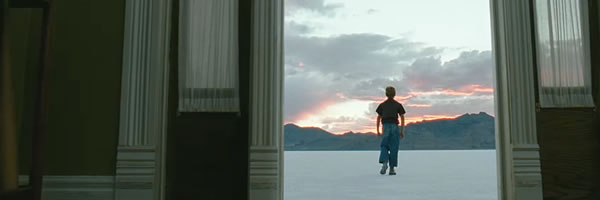
When images exploring the creation of the universe appear alongside Sean Penn staggering through a wooden door frame into the nothingness of the desert, Malick makes it far to easy to simply deem The Tree of Life a load of pretentious dribble. And whilst this is clearly a deeply personal project for Malick, images of a giant in the attic and mum floating around the lawn often make it difficult to take what is clearly serious material very seriously.

The Tree of Life is a personal declaration of beliefs for Terrence Malick and the ambition and scope of the project has to be commended. However, despite the truly amazing visuals making it the best looking picture of the year so far, there are just too many too many frustratingly dull patches and moments that are far too difficult to defend against the inevitable cries of pretension. It may be a film that is best watched in the vein of Godfrey Reggio’s Qatsi Trilogy* and taken purely as a sensory experience but the flaws previously mentioned can’t help but leave The Tree of Life something of a disappointment. A difficult film to enjoy or truly recommend to anyone other than Malick enthusiasts.


*Godfrey Reggio’s Qatsi Trilogy consists of Koyaanisqatsi: Life out of balance (1983), Powaqqatsi: Life in transformation (1988) and Naqoyqatsi: Life as war (2002). With no dialogue or narrative, the films are made up of slow motion and time-lapse footage of American cities and landscapes (Koyaanisqatsi), life in industrial countries (Powaqqatsi) and conflict (Naqoyqatsi) put to music composed by Philip Glass. Each can be found on Google Videos, Youtube or cheap on DVD and make for interesting viewing.

Saturday, 9 July 2011

Irreversible Review


Frequently topping lists of the most controversial movies of all time, Gaspar Noé’s Irreversible (2002) proves to be a film that actually deserves its tag. Films are all too often labelled as shocking in a bid to drum up controversy and put bums on seats when in actual fact they just sound worse than they actually are. (Whilst all having their moments, A Serbian Film, Antichrist and Ichi the Killer fall smack bang into this category). Irreversible proves to be deeply upsetting, difficult to watch, and actually shocking whilst all the while actually having something to say. This isn’t shock for the sake of shock.

The film follows couple Alex (Monica Bellucci), her boyfriend Marcus (Vincent Cassel) her ex Pierre (Albert Dupontel) on a night out. After an argument with Marcus, Alex leaves a party alone and is brutally raped and beaten in an underpass. The act of violence breeds more violence when Marcus and Pierre then head out to find the rapist and get revenge. Crucially the film is told in a reverse order like Memento and 5x2 and opens with the brutal act of vengeance, giving the film a mood and tone that gradually shifts the characters from hell to heaven, starting with violence and ending with a romantic bedroom scenario.

Newsweek reported that this was the most walked out movie of the year. The first half hour of the film has a background noise with a frequency of 28Hz (low frequency, almost inaudible), similar to the noise produced by an earthquake. It causes nausea, sickness and vertigo and added to apparently achieve these reactions. 200 walked out of the Cannes screening while three had to be carried. It’s clear to see why. If you stay past the brutal act of violence at the start of the film then the 9-minute rape sequence proves just as difficult to sit through. And so they should be. Through these sequences Noé brings up the point that if we’re complaining that the rape scene is too horrible and the violence too disgusting, it says more about what we’re used to as an audience than it does about Noé’s decision to include them. Irreversible is a film that confronts the audience head on and challenges them to think about what we accept on the cinema screen and why.

Aside from the controversy, Noé’s trademark visuals continue to dazzle. Just as his camera floated around Japan and in and out of everything and anyone in sight in his latest, the mesmerising Enter the Void (2010), in Irreversible the camera has just as much personality. It frantically bounces around, desperate to follow the action with images spinning into a disorientating blur when travelling back in time. For a film with content that makes you want to look away, his style can’t help but ruthlessly grip your gaze.

Irreversible is a must see film that truly shocks but only to make you think. By showing events in reverse order, Noé forces you to assess the gross acts in the film in a context that attempts to prove that violence only breeds violence. Alongside Enter the Void (I have not yet seen his first film, I Stand Alone (1998)), and Irreversible Gaspar Noé has established himself as one of the most important directors working today and one creating engaging films with a truly unique vision and style. One can only imagine and anticipate what he will produce in his next venture, a segment involving an exorcism in the anthology movie 7 Days in Havana to be released in next year.

For those who see the film and regard it as empty attempt at shock, Roger Ebert has written a useful review that outlines the importance of its reverse order. Check it out here - http://rogerebert.suntimes.com/apps/pbcs.dll/article?AID=/20030314/REVIEWS/303140303/1023

Sunday, 3 July 2011

Film4 Frightfest Line-up Announced


This year’s line up has finally been revealed and looks set to be a great week. The titles I’m personally looking forward to seeing include Rabies, Don’t Be Afraid Of the Dark, Vile, The Woman, The Divide, The Kill List, The Innkeepers, Chillerama, Inbred and Guinea Pigs but the full line-up looks amazing for both screens and can be seen below. I'll be putting up short reviews of as many of these movies as I can during the last week in August.


Main Screen
Don’t Be Afraid Of The Dark
Final Destination 5 3D
The Theatre Bizarre
Rogue River
The Holding
Total Film Interview with Larry Fessenden plus American Horror: A Discussion with Ti West, Adam Green, Joe Lynch, Andrew van den Houten and Lucky McKee
Urban Explorers
The Glass Man
Tucker and Dale Vs Evil
Vile
Troll Hunter
The Wicker Tree
Panic Button
Fright Night 3D
The Woman
Chillerama + Bad Moon Rising
The Divide
Short Film Showcase
Andy Nyman’s Quiz from Hell 2
The Innkeepers
Saint
Kill List + Shifter
Detention
Guinea Pigs Cancelled due to Post-production issues and replaced with A Night in the Woods
Dead Heads
Sennentuntschi: Curse of the Alps
Inbred
A Lonely Place to Die

Discovery Screen
The Man Who Saw Frankenstein Cry
A Horrible Way to Die
Midnight Son
Rabies
Blood Runs Cold
Kidnapped
Stormhouse
The Dead – Live Commentary
Atrocious
My Sucky Teen Romance
The Caller
The Devil’s Business

Friday, 10 June 2011

Film4 Frightfest 2011 Preview


In the last week of August, I'll be occupying a regular seat in Leicester Square's Empire cinema for the Film4 Frightfest 2011. The festival is a series of horror screenings and premieres that have included in the past, Ringu 2, Dark Water, The Eye, Oldboy, Switchblade Romance, Martyrs, Creep, Wolf Creek, Pan's Labyrinth, Them, The Host and Triangle as well as welcoming guest speakers that include Tobe Hooper (The Texas Chainsaw Massacre) and zombie maestro George A. Romero.

The opening film of the festival will be Don't Be Afraid of the Dark, produced by Guillermo del Toro and closing will be Julian Gilby's A Lonely Place To Die. The Norwegian handheld camera comedy/horror  TrollHunter will also appear at some stage and is already looking destined to be a cult classic.

The full line-up will be revealed on July 1st.

Here are trailers for the three that have been announced.

Don't Be Afraid of the Dark - http://www.youtube.com/watch?v=mFE4lGvRt8E

TrollHunter - http://www.youtube.com/watch?v=TLEo7H9tqSM

A Lonely Place To Die - http://www.youtube.com/watch?v=gLfjAPdtt88

Thursday, 2 June 2011

The Hangover Part II Review


“It happened again!” says a distraught Phil as Todd Philip’s The Hangover Part II begins. And he’s not lying. The sequel to the highest grossing R-rated comedy of all time in the US is pretty much a Bangkok set remake, but fortunately what was funny in Vegas is still funny here.

The film, set two years after the first, takes place around Stu’s (Ed Helms) wedding in Thailand. He invites Phil (Bradley Cooper), Doug (Justin Bartha) and reluctantly Alan (Zach Galifianakis) and attempts to prevent a repeat of 2009's drunken antics by replacing a bachelor party with a bachelor brunch. Suffice to say it doesn’t work and after what set out to be a few quiet drinks on the beach, the Wolf pack find themselves waking up, dazed and confused in a dingy Bangkok hotel with a scantily clad Leslie Chow (Ken Jeong).

From here, fans of the original will know where the film is going as it follows the formula of the first almost down to a tee, albeit rather than Doug, the trio find themselves looking for Stu’s brother-in-law to be, Teddy, who is seemingly alone and missing a finger somewhere in the belly of Bangkok.

Once again Alan gets all the best lines, there is a car chase, Stu sings a song, people get hurt, a hilarious photo-montage plays people out of the cinema and a monkey replaces the baby as the cute tag-along.

However, it is Bangkok which ensures the film doesn’t suffer due to its striking similarities to Part 1. A city so dark, dingy and seemingly dangerous gives the film a dark edge that the first one was lacking. Things are more desperate, crueler and ultimately the laughs are often more in disbelief at what is happening as a result. To go into anymore detail would ruin some hilariously grim moments, suffice to say, it really is a case of if you don’t laugh, you’ll cry.

Despite knowing where the film is going to go due to the clear similarities to the first film, The Hangover Part II takes full advantage of its new, dark Bangkok playground to provide more laughs that dance across the line of bad taste. Some will find the sameness irritating and it is hard to argue against the idea that the film as merely a remake of the first in a new location; but in the end it doesn’t matter. Part II is formulaic but very funny. If you laughed in Vegas, you’ll laugh in Bangkok. Or to coin Alan’s claim – “When a monkey nibbles on a penis, it’s funny in any language.”


(Fans of the Wolf pack and those who didn’t find familiarity funny will be pleased to hear that Todd Philips has recently stated that “If we were to do a third one, if the audience, if the desire was there, I think we have a very clear idea where that would head. It’s certainly not in the same template that you’ve seen these movies. The third would be very much a finale and an ending. The most I could say about it, what’s in my head, and I haven’t discussed it with these actors, is that it is not following that template but very much a new idea.”)

Saturday, 28 May 2011

4 Review


‘The possibility of becoming the same as everyone else, not only in my behaviour, but in my inner structure would make me unable to feel real things, and would formalise everything – this is of such great concern to me that the film turned out to be partially about this. It’s about different-sameness.’ So says the director, Ilya Khrzahnovsky, on 4 (2005), a strange film about the odd concept of ‘different-sameness’, although even the DVD blurb is big enough to admit ‘it’s quite clear that something is going on – even if we don’t know what’.   

The film opens with prostitute Marina (Marina Vovchenko), meat merchant Oleg (Yuri Laguta) and piano tuner Volodya (Sergey Shnurov) randomly meeting in a bar, only to each begin constructing alternate identities for themselves. Marina passes herself off as a marketing manager for a new Japanese gizmo, Oleg pretends to work for the president (albeit only supplying him with bottled water) and Volodya claims to work on the secretive cloning operation that has worked successfully underground in Russia for years.

This first hour of the film is the strongest, as each lie slowly comes back in some way to haunt the characters, some even finding their actual lives becoming just as fictional as the fibs told in the bar. Constantly filmed in interesting ways with a brilliantly disgusting sound design, 4 (for it’s 1st half at least) provides an interesting comment on the idea that our lives run smoothly thanks to the lies we tell. These characters seem to share Khrzahnovsky’s fear of becoming the same as everyone else and so invent these alternative lifestyles that, for one conversation at least, propel them out of the drudgery of their real lives and into important roles in society.

I have never been to Russia and thanks to the images seen in 4, I don’t think I ever really want to. Stray dogs roam the streets and can be found in almost every frame of the film set outside. Huge bulldozers and other heavy machinery clog the atmosphere with smoke. The people in the film make the faces of Fellini look desirable as Khrzahnovsky appears to have cast those with only, shall we say, unusually put together faces; all helping to cast Russia in a delightfully nightmarish glow.

And yet, despite the undeniably bleak landscapes and communities who look older than they probably are, the film is full of darkly comic moments. One scene in which two old ladies pull, tug and slap their own bare breasts is a sure-fire laugh or cry moment, depending on your tolerance for 75-year old stretch marks.

The film’s lack of any real point does begin to outstay its welcome when Marina goes to a funeral full of old women who make dolls from chewed up pieces of bread but despite this, 4 is ultimately an interesting, visually arresting, albeit pointless film that raises some interesting questions about the inconvenience that is truth.

Here’s the opening minute of the film. It very much starts as it means to go on so this is a fairly decent test to see if you’ll be able to stomach this kind of inventive but seemingly meaningless action. http://www.youtube.com/watch?v=7FcUyGAapjg&feature=player_embedded

Sunday, 1 May 2011

Insidious Review


Just when you thought 2011 was shaping up to be a bit of a poor year for horror (The Rite, The Roommate and Justin Bieber: Never Say Never spring to mind) along comes Insidious, the new film from Saw’s James Wan to provide a some long overdue cinema scares.

The film sees Renai (Rose Byrne) and Josh Lambert (Patrick Wilson) move into a nice, big new house with their three kids. After some small, but severely strange goings on, their son, Dalton (Ty Simpkins), falls into a coma and triggers the start of some seriously creepy activity in the house.

Horror films seem to be the easiest to deem good or bad. Did it scare you? If so, it’s good, if not, then bad. Insidious scared me several times. The first hour of the film contains more than enough jumps, scares and subtly terrifying moments to heartily recommend it to both horror fans and anyone looking for a few sleepless nights.

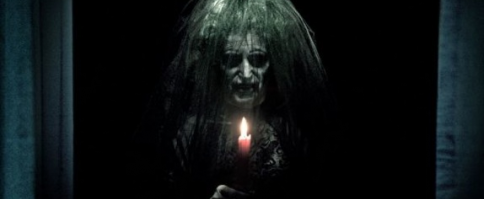
There are nasty images that linger in the mind, figures that invade the screen from every, unexpected angle and an opening sequence that, although brief, was ingrained in my mind long after the credits stop rolling. (Largely because at the end of the credits, the opening, ghoulish image is seen again).

In these kinds of films, particular moments and sequences stand out. Whistling shadows in M (1931), a ball going down the stairs in The Changeling (1980), THAT bit in Inside (2007) the flashing face in The House of the Devil (2009), the woman who lives downstairs getting some air in Martyrs (2008), take your pick from The Exorcist (1973). Thankfully, Insidious has one of these stand out moments that involves dancing and ‘Tiptoe Through The Tulips’ by Tiny Tim; one of the most effective songs used in a horror film in a long time. http://www.youtube.com/watch?v=K6qDOprU-Ps. Have a listen and try your very best to sleep with the lights off. Horrible.

Despite the scares, the characters seemed difficult to care about, but then again, horror is a bit of a selfish genre. Its not about them, it’s about you. You need to be scared. You need to look through your fingers. You need to shit your pants. If the characters strike a chord, it’s generally a bonus.

The film does stumble in its last twenty minutes, leaving the corridors of the haunted house and dipping into fantasy; a move that contained some scary moments, but generally stilted the tension that went before it which is a shame as had it kept up the atmospherics of its first hour, Insidious could have been a modern gem.

As it is, Insidious won’t win any prizes for originality, but despite losing its way in the second half, has more scares in it than anything seen in a while and with some truly memorable sequences, jumps galore and disturbing images that I’m finding hard to shake off, the first hour and a bit of Insidious is brilliantly, terrifying stuff. All together now: Tiptoe by the window, that is where I’ll be, come tiptoe through the tulips with meeeeeeeeee.